Prepared for a Stage That Never Comes: The Quiet Power of Rehearsing Roles You May Never Perform

I have spent hours — days, if I am honest — learning lines for productions I never joined. I have built characters from the ground up, researched their histories, mapped their emotional architecture, and then quietly folded those pages away when the call never came. For a long time, I treated this as a kind of professional grief. A rehearsal for nothing. A preparation that led nowhere.
I was wrong about that. It took years to understand just how wrong.
The Paradox of Preparation Without Performance
There is a cultural assumption in the performing arts — and in American entertainment culture broadly — that preparation is only valuable when it produces a visible result. We celebrate the opening night. We remember the performance. The audition circuit, the callback, the offer: these are the milestones we track. What happens in the weeks before the offer arrives, or in the months after it fails to, rarely enters the conversation.
But preparation is not merely a means to an end. It is, in its own right, a form of practice — one that operates on the performer's instrument in ways that no single performance ever could. When you prepare for a role you may never play, you are not rehearsing a show. You are rehearsing yourself.
The understudy tradition in American theater has long understood this, even when it has not always articulated it well. The performer who learns a role they may cover once, or never, is not wasting time. They are building a secondary nervous system — a set of instincts calibrated to demands that exist outside their current assignment. That calibration does not disappear when the production closes. It travels with them.
What Deep Preparation Actually Builds
When a performer commits fully to learning a role they have not been cast in — genuinely commits, rather than offering a cursory review — several things happen beneath the surface.
First, the range expands. Every character demands a different physical and emotional vocabulary. A role that sits outside a performer's comfort zone requires them to stretch in directions they would not otherwise choose. That stretching is not comfortable. It is also not optional if growth is the objective. The performer who studies only what they are already good at becomes, over time, a very polished version of a limited instrument.
Second, the analytical capacity sharpens. When you break down a role without the pressure of an impending performance, you approach the text differently. There is no deadline forcing shortcuts. You can ask harder questions about motivation, subtext, and structure. You can sit with ambiguity longer. That quality of close reading — unhurried, genuinely curious — produces insights that carry directly into every future role you do perform.
Third, and perhaps most importantly, the relationship with outcome begins to shift. A performer who has prepared extensively for roles that never materialized learns, through repetition, that the value of preparation is not contingent on what follows it. This is not a small thing. Attachment to outcome is one of the most consistent sources of performance anxiety in working artists. The practice of preparing without guarantee is, in its way, a form of mental conditioning — one that makes the actual performance less fraught, not more.
Staying Invested Without Clinging to the Result
The practical challenge, of course, is this: how does a performer remain genuinely invested in preparation when the outcome is uncertain or, frankly, unlikely? Motivation is easier to sustain when a first night is on the calendar. It is considerably harder when the work exists in a kind of suspended state, neither confirmed nor abandoned.
Several techniques have proven useful to me over the years.
The first is reframing the objective entirely. Rather than preparing a role in order to perform it, prepare it in order to understand it. The goal becomes mastery of the material, not deployment of the material. This is not a semantic trick. It is a genuine reorientation that changes how you approach each rehearsal session and makes the work intrinsically rewarding rather than instrumentally motivated.
The second is documentation. Keep detailed notes on the work — observations about the character, questions that arise, choices you are testing. This serves two purposes. It forces a level of engagement that passive reading does not, and it creates a record that remains useful long after the specific role has faded. Patterns emerge across characters. Recurring questions reveal something about your own instincts as a performer. The notes become a resource that outlasts the preparation that generated them.
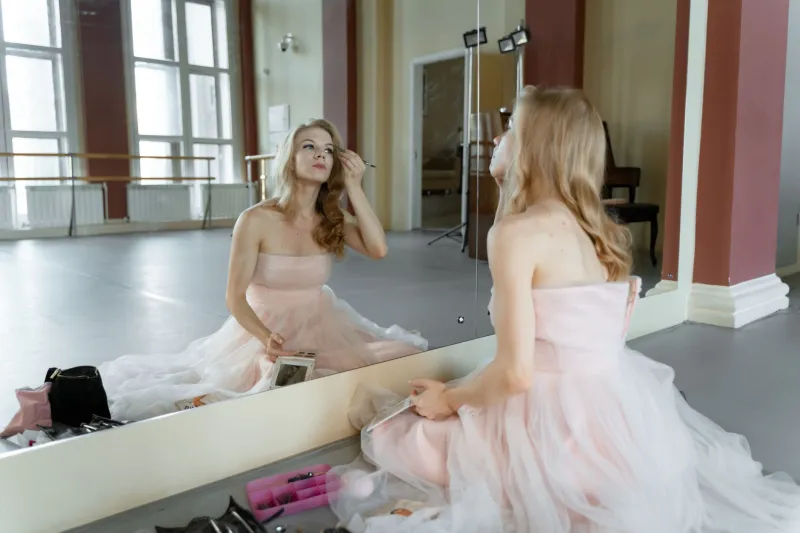
The third is finding an audience, even a small one. Read the work aloud with a trusted collaborator. Run scenes informally. The absence of a formal production does not mean the absence of feedback. A single trusted observer, responding honestly in a living room or a rehearsal studio, provides more useful information than a hundred hours of solo preparation. The work needs friction to develop. Provide it deliberately.
The Performer Who Is Always Ready
There is a phrase that circulates in American theater — the idea of the performer who is "always ready." It is used admiringly, sometimes enviously. What it actually describes is someone who has prepared for more than they have been asked to perform. Someone whose range exceeds their current assignment. Someone who, when the unexpected opportunity arrives — and in this industry, the unexpected opportunity is often the only kind that matters — does not need additional time.
That readiness is not accidental. It is the accumulated result of preparation that was never conditional on outcome. It is the product of roles studied in empty rooms, characters inhabited without witnesses, work that no one tracked and no one applauded.
I have played roles I spent months preparing for. I have also spent months preparing for roles I never played. Looking back at the arc of my work, I am not certain the second category has been less valuable than the first. The performances I am proudest of were built, in part, on preparation that had no direct relationship to those performances at all.
The Work Beneath the Work
The performing arts ask a great deal of their practitioners. They ask for vulnerability, for discipline, for a tolerance of uncertainty that most professions do not require. They also ask — and this is the part that is rarely discussed openly — for a willingness to work without the guarantee of a return.
Preparing for a role you may never play is an act of faith in your own development. It is a declaration that the work itself is worth doing, independent of what the work produces. That declaration, made consistently over the course of a career, becomes the foundation on which everything visible is built.
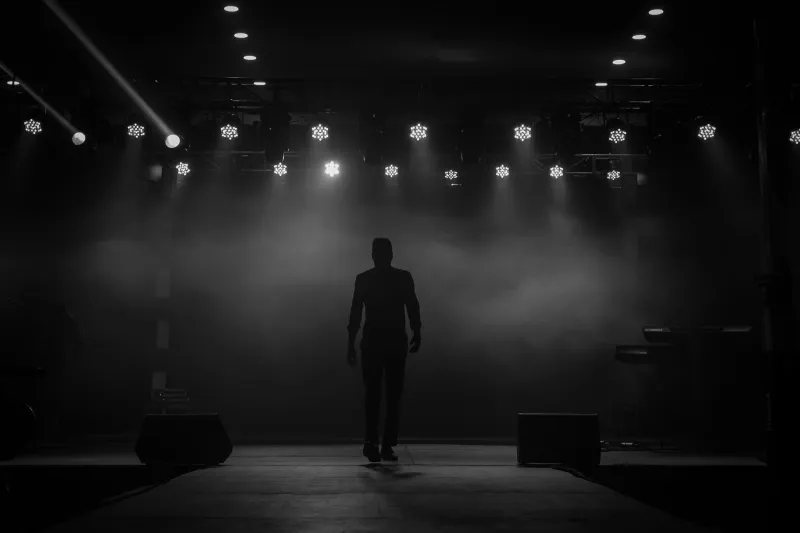
The stage that never comes is not a failure. It is, if you approach it correctly, one of the more honest teachers available to a working performer. What it teaches is this: the preparation is the point. Everything else — the performance, the recognition, the applause — is what happens after the real work is already done.