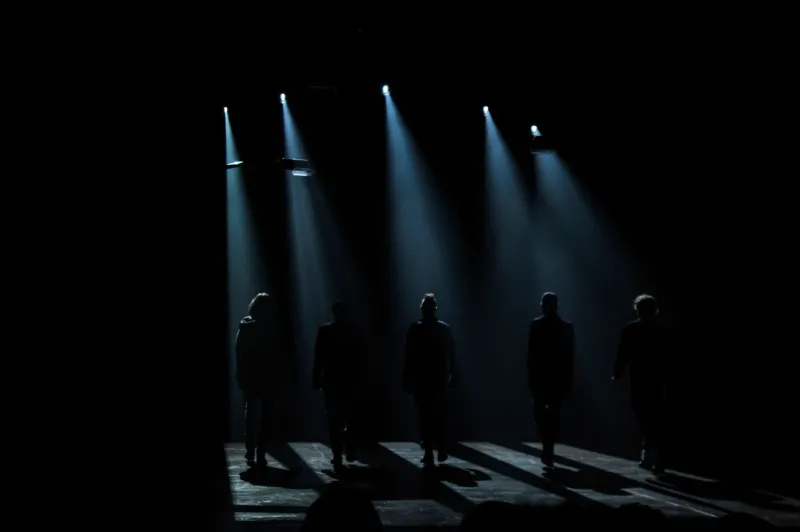
Every Character I Was Never Meant to Play Changed the Way I Tell Every Story
For most of my early career, I believed that mastery meant depth. That the performer who had lived inside a single role the longest—who had memorized not just the lines but the silences, the breath patterns, the precise tilt of the head during the second-act revelation—was the one who had truly arrived. I chased that kind of depth with something close to reverence.
Then circumstances intervened, as they reliably do.
I became the person who knew everyone's part. Not because I had any particular gift for retention, and certainly not because I was angling for some competitive advantage. I became that person because the work demanded it. Someone was sick. Someone left. Someone needed covering. And I was there, willing and available, holding a script I had not studied, standing in shoes that had never been fitted for my feet.
What followed was one of the more disorienting and ultimately transformative stretches of my professional life.
The Unexpected Curriculum of the Borrowed Role
When you learn a character you were not designed to play, you cannot rely on instinct alone. You have to think. You have to ask questions that a performer settled comfortably into their own role never has cause to ask: Why does this person make this choice here? What does this character want from the person standing across from them in this scene? How does the story change if I read this motivation differently than my predecessor did?
Those questions are not decorative. They are structural. They force a performer to engage with narrative architecture in a way that comfort rarely demands.
I remember stepping into a role that was, on the surface, nothing like the work I had been doing. The character operated from a place of quiet menace rather than the openness I typically brought to the stage. Everything about the physicality was foreign. And yet, somewhere in the third week of inhabiting that borrowed space, I understood something about the story I had been telling in my own role that I had never grasped before. The two characters existed in deliberate counterpoint. The playwright had designed them to illuminate each other. I could not have seen that from inside just one of them.
That realization did not leave me when I returned to my original work. It settled in permanently.
Versatility as a Form of Fluency
There is a useful analogy in language acquisition. Research on bilingualism has long suggested that speakers who move between two languages develop a kind of cognitive flexibility—an ability to hold competing frameworks simultaneously—that monolingual speakers often do not access in the same way. The friction of switching, the constant negotiation between two distinct systems, builds something in the mind that ease and fluency in a single language cannot replicate.
Moving between characters functions similarly. Each role carries its own internal logic, its own relationship to time and silence and the audience's attention. When you are fluent in more than one of those systems, you begin to perceive the logic itself, not just the expression of it. You see the scaffolding beneath the architecture.
This is what I mean when I say that being forced to learn multiple roles made me a better storyteller. I do not mean that I became a more technically accomplished performer across a wider range of material, though that happened too. I mean that my understanding of what a story actually is—what it requires, how it moves, what it asks of the person delivering it—expanded in ways that a single, deeply inhabited role could not have produced on its own.
What Characters Teach Each Other
Every character I have ever inhabited has, in some sense, taught me something about every other character I have inhabited. They exist in dialogue with one another inside me, even when they share no stage and no narrative.
A villain teaches you about vulnerability because you have to find the wound beneath the cruelty. A comic figure teaches you about grief because nothing lands as flat as comedy that has not been grounded in genuine human longing. A supporting role teaches you about attention because the only way to hold an audience when you are not the center of the scene is to be so fully present that the audience cannot look away.
These lessons do not stay compartmentalized. They migrate. They inform one another in ways that are difficult to predict and impossible to engineer deliberately. They only arrive through accumulation.
I think about performers I have admired over the years—the ones whose work carries a particular quality of richness, a sense that there is more happening beneath the surface than any single scene can contain. Invariably, when I learn more about their histories, I find range. I find the scrappy early years of doing everything, of filling gaps, of saying yes to roles that did not fit because the alternative was not working at all.
The Translation Problem
One of the most practical things that multi-role fluency taught me is how to read an audience differently depending on what I am asking of them. Different characters make different demands. Some invite identification; the audience is meant to see themselves. Others invite distance; the audience is meant to observe, to judge, to feel the productive discomfort of watching something they recognize but would not claim.
Knowing how to shift between those modes—knowing, almost intuitively, what a given piece of material requires from the room—is a skill I did not develop by perfecting a single role. I developed it by watching audiences respond to wildly different material through my own body. I was the variable that changed. I got to see what changed with me.
That knowledge translates beyond performance in ways that continue to surprise me. In any professional or creative context where communication matters—which is to say, in virtually every context—the ability to read what a situation requires, to modulate your approach based on what you understand about the audience in front of you, is among the most durable skills a person can carry.
The Gift That Arrived Uninvited
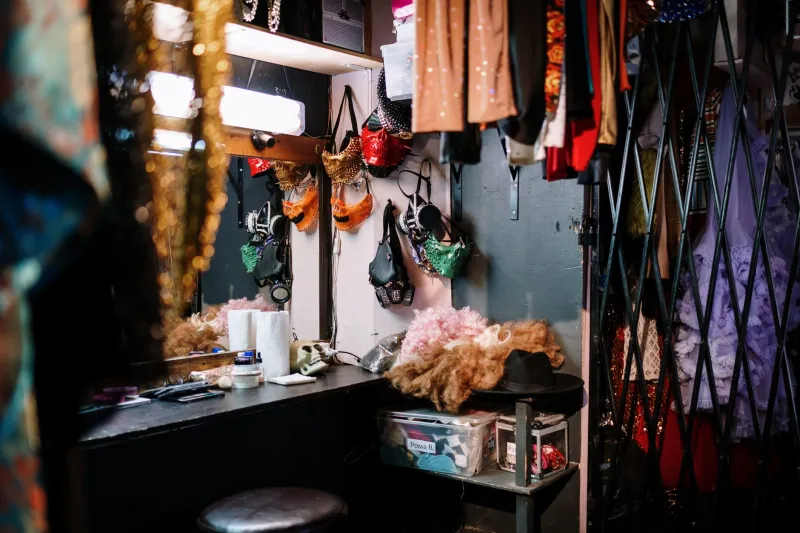
I did not ask to become the person who knew everyone's part. I did not design a development plan that included emergency coverage and borrowed costumes and the particular anxiety of stepping into a role with forty-eight hours of preparation. That education arrived uninvited, the way the most useful educations often do.
What I can say, with the clarity that only retrospect provides, is that I would not trade it. The performer I became by inhabiting roles that were never written for me is a more capable, more curious, and more genuinely engaged storyteller than the one I would have been had I simply perfected the part I was originally handed.
There is a version of mastery that looks like depth, and it is real and valuable. But there is another version that looks like range—that looks like the accumulated understanding of many different ways of being human on a stage. That version, I have come to believe, is the one that lasts.