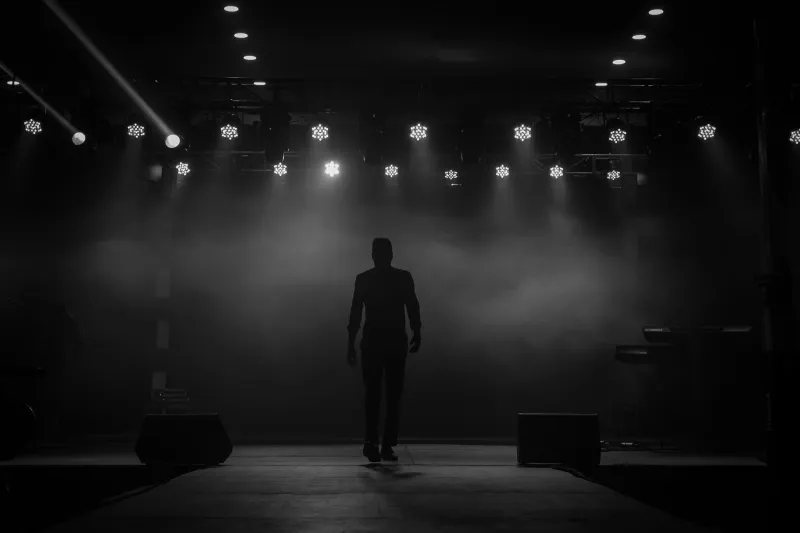
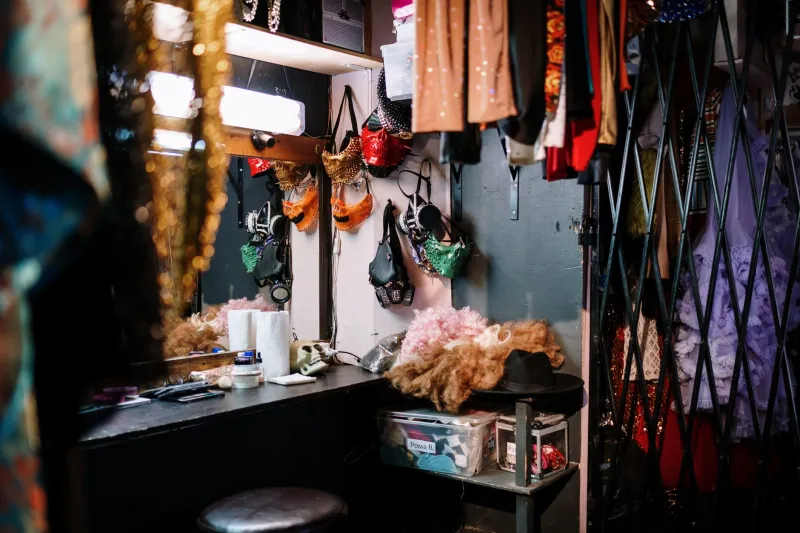
Invisible Reps: The Secret Practice Life of Performers Who Actually Last
The Room Nobody Photographs
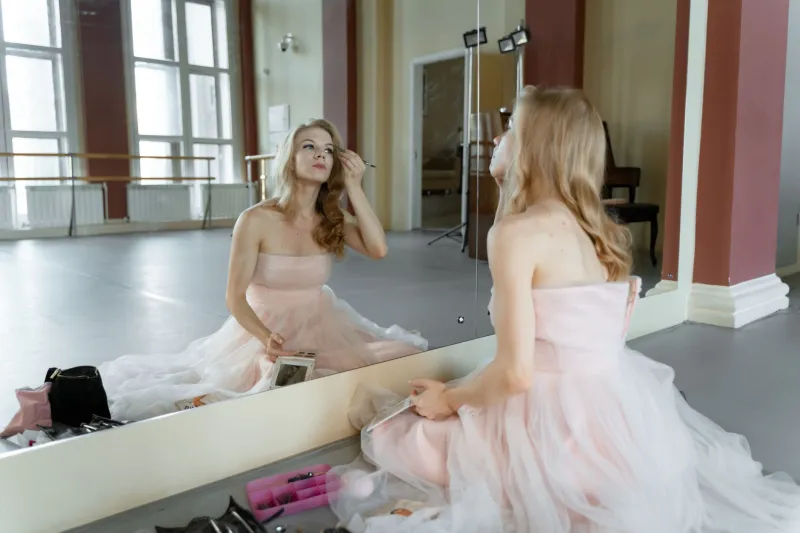
There is a particular kind of quiet that settles over an empty rehearsal studio at seven in the morning. No audience, no director calling adjustments, no fellow cast members filling the space with nervous energy. Just the performer, the material, and a mirror honest enough to show everything the applause conceals.
I have spent more hours in rooms like that than I could ever accurately count. And for a long time, I treated those hours as a necessary inconvenience — the toll you pay to get to the part that actually matters. It took years, and a handful of humbling experiences, to understand that I had the equation exactly backward. The private work was never the toll. It was the destination.
This is the central insight that separates performers who build lasting careers from those who peak early and puzzle over what went wrong: the willingness to treat invisible preparation with precisely the same seriousness as public performance.
What the Understudy Understands
In American theater, the understudy occupies a peculiar psychological position. They are simultaneously essential and overlooked — present at every rehearsal, absorbing every directorial note, memorizing every blocking choice, and yet rarely acknowledged in the program in a way that registers with audiences. They prepare, often for months, for a performance that may never come.
To the casual observer, this arrangement looks like a raw deal. To anyone who has spent serious time in the performing arts, it looks like an education without equal.
The understudy cannot afford to practice conditionally. They cannot tell themselves they will really buckle down once they get their shot, because the shot may arrive with forty minutes' notice and a stage manager's breathless phone call. The preparation has to be complete before the opportunity appears — not during it, and certainly not after. That constraint, as uncomfortable as it is, forges a kind of readiness that principal performers sometimes never develop, precisely because they always had the luxury of a guaranteed opening night.
I think about this dynamic often when I consider my own relationship to preparation. The projects that have served me best over time were rarely the ones I prepared for most publicly. They were the ones I had been quietly rehearsing toward — sometimes without even consciously recognizing it — long before anyone offered me the role.
The Psychology of the Unseen Rep
Sports psychology has a useful concept here, one that translates cleanly to the performing arts: the idea of deliberate practice versus mere repetition. Simply going through motions accumulates hours without building capability. Deliberate practice — focused, self-correcting, goal-oriented work done even when no one is grading the result — is what actually moves the needle.
What makes private preparation particularly powerful is the absence of the social performance layer. When you rehearse alone, you cannot hide behind the energy of a room. You cannot let a generous audience response paper over a weak moment in your material. You cannot coast on charisma when there is no one present to be charmed. The work either holds up or it does not, and the mirror tells you which.
This is uncomfortable. It is also irreplaceable.
Some of the most significant breakthroughs in my own practice have come not from notes delivered in public settings, but from the private recognition — in a quiet room, with no one watching — that something I had been doing for years was subtly wrong. That kind of honest self-appraisal requires solitude. It requires a willingness to keep working when the work offers no immediate reward, no validation, no social proof that the effort is justified.
The performers who resist that discomfort tend to plateau. The ones who lean into it tend to keep growing long after their contemporaries have settled into comfortable repetition.
Building the Infrastructure of Readiness
There is a practical architecture to this kind of preparation, and it is worth making explicit.
First, it requires treating unscheduled time as scheduled time. The hours between engagements are not vacation; they are the period when foundational work gets done without the distorting pressure of an imminent performance. Technique gets refined. New material gets developed. Weaknesses get addressed without an audience present to notice the stumbling.
Second, it requires maintaining standards even when no external standard is being enforced. This is harder than it sounds. When no one is watching, the temptation to let things slide — to run a scene at three-quarter effort, to skip the difficult passage, to call a run-through good enough — is constant. The performers who resist that temptation are the ones who show up differently when the spotlight finally arrives.
Third, and perhaps most importantly, it requires making peace with the possibility that some of the preparation will never be publicly deployed. The understudy who prepares a full performance and never goes on has not wasted their time. They have built something real, even if no audience ever witnesses it directly. That built capacity shows up in every subsequent performance, in ways that are often difficult to trace but impossible to fake.
The Career-Length View
One-hit wonders, in virtually every corner of the entertainment industry, tend to share a common characteristic: they were not ready for what happened to them. The opportunity arrived, they rose to meet it on instinct and raw talent, and then — when the moment passed and the next challenge required something more deliberate — the infrastructure simply was not there.
This is not a moral failing. It is a preparation failing, and it is an entirely preventable one.
The performers who build careers across decades — not just across a single breakout season — are almost uniformly people who treated the invisible hours as seriously as the visible ones. They were ready not just for the opportunity in front of them, but for the opportunities several steps ahead. That readiness did not appear spontaneously on opening night. It was constructed, quietly and without ceremony, in empty rooms over long stretches of time.
The Discipline of Showing Up When No One Is Counting
I will not pretend this mindset comes naturally or that it requires no effort to sustain. There are mornings when the empty studio feels less like a site of meaningful work and more like a reminder of everything still waiting to be earned. The absence of an audience can feel, on certain days, less like freedom and more like irrelevance.
But I have come to understand that feeling as a signal rather than a verdict. The discomfort of unseen effort is precisely what gives it value. Anyone can perform when the house is full and the stakes are visible. The distinguishing question — the one that actually determines career trajectory — is what you do when the house is empty and no one is keeping score.
The answer, for those who last, is always the same: you do the work anyway. You do it with the same care, the same standards, and the same commitment you would bring to the most important performance of your life.
Because the truth is, you are always preparing for exactly that.