Forged in the Gap: How the Performer Nobody Picked First Becomes the One Nobody Can Replace
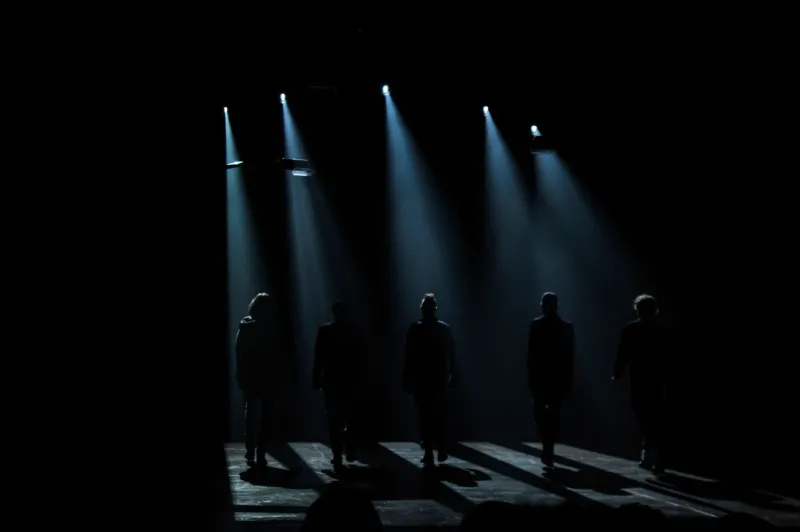
There is a particular kind of excellence that only emerges under the weight of being overlooked. The performer who enters a production as the contingency plan, the backup, the name printed in smaller type, is often the one who leaves it having mastered every dimension of the role. Being second choice, it turns out, is one of the most rigorous training grounds the performing arts have ever produced.
I have been that name in smaller type. More than once. And I have watched what that position quietly demands of a person — not just technically, but psychologically, strategically, and in terms of sheer creative resourcefulness.
The Invisible Curriculum Behind the Curtain
When a performer is cast as the primary, the work is still immense, but the architecture of their preparation is largely defined for them. Rehearsal schedules are built around their availability. Direction is delivered to them first. The creative team invests its attention in making them succeed because the production's visible success is tied to theirs.
The understudy, the alternate, the swing — these performers inhabit an entirely different ecosystem. They must absorb everything the principal receives, often from the periphery of the room, while simultaneously developing their own interpretation without the benefit of extended one-on-one guidance. They must be ready not when the calendar says so, but when circumstance demands it. That difference — between scheduled readiness and immediate readiness — is not a minor distinction. It is the difference between competence and mastery.
When you do not know which Tuesday you will be called upon, every Tuesday becomes an audition. And when every moment is potentially the moment, your preparation reaches a depth that scheduled performance rarely compels.
Lowered Expectations as a Proving Ground
There is something almost liberating about entering a room where the audience's expectations of you are modest. I do not say this to romanticize being underestimated — it is, in practice, often quietly painful. But from a purely strategic standpoint, the performer who steps into a role without the weight of enormous pre-existing expectation carries a distinct advantage: they have room to exceed.
Consider what happened in the early career of Sutton Foster, who entered the Broadway production of Thoroughly Modern Millie as a replacement for the departing Erin Dilly mid-production. She was not the name on the marquee when the show opened. She was the performer who arrived when the spotlight was already aimed elsewhere. She then proceeded to win the Tony Award for Best Actress in a Musical and redefine what that production meant to audiences. The understudy's trajectory had become the headline.
This pattern is not an anomaly. It recurs throughout American theater, film, and music with enough consistency to suggest it is structural rather than coincidental. The performer who is handed the role without ceremony must construct their authority over it from the ground up — and in doing so, they often build something more durable than what came before.
The Technical Dividend of Being a Gap-Filler
Beyond the psychological dynamics, there is a concrete technical argument for the advantage that secondary status confers. Performers who are expected to step into roles at short notice develop a specific set of skills that primary performers rarely need to cultivate to the same degree.
They become exceptional at rapid score absorption. They develop an almost architectural understanding of blocking, because they must map it from observation rather than through direct instruction. They grow adept at reading a room from the moment they walk into it, calibrating their energy to a cast that has been rehearsing without them. They learn to take direction efficiently, because they often receive less of it and must extract more from each note.
These are not soft skills. They are the technical competencies that make a performer genuinely flexible — the kind of flexibility that directors remember, that producers value, and that sustains a career through the inevitable shifts in a long professional life.
Control Through Competence
One of the more counterintuitive outcomes of the understudy's journey is the degree of career control it ultimately confers. This seems paradoxical: how does being chosen second translate into greater autonomy?
The answer lies in versatility. A performer who has proven they can step into any gap, master any role under pressure, and deliver without a safety net of extended preparation becomes genuinely indispensable to the institutional structures of professional performance. They are not dependent on a single star vehicle or a single creative team's vision of them. They have demonstrated a range of capability that opens multiple doors simultaneously.
The principal who has only ever played leads, who has been protected by first-call treatment and extended rehearsal periods, often finds themselves in a more precarious position when that singular opportunity disappears. The performer who was forged in the gap, by contrast, has already proven they can work in conditions that others have not had to navigate. That proof does not expire.
What Being Overlooked Actually Requires of You
I want to be honest about something: none of this is easy, and I would be doing a disservice to any performer reading this if I framed the understudy's path as simply a hidden gift waiting to be unwrapped. The psychological cost of sustained invisibility is real. The discipline required to maintain peak readiness for a performance that may or may not come is genuinely taxing. The patience demanded of a person who knows they are capable of more than they are currently being asked to demonstrate is not a small thing.
What being overlooked actually requires of you is a commitment to your own standard that is entirely independent of external validation. You must decide that the quality of your preparation matters regardless of whether anyone is watching it. You must find a way to stay technically sharp without the adrenaline of regular performance to sharpen you. You must, in short, develop a relationship with your craft that is intrinsic rather than contingent.
That relationship — once built — becomes the foundation of everything.
The Long Game
Careers in the performing arts are long, and the landscape shifts in ways that are almost impossible to predict from the vantage point of any single production. The performer who arrives with fanfare may find that the industry's attention moves on before they have had time to build something lasting beneath the visibility. The performer who was quietly forged in the gap, who built their technical mastery through repetition and readiness rather than recognition, often finds that their foundation is considerably more stable when the inevitable winds of change arrive.
Being second choice is not a permanent designation. It is, for those willing to treat it as such, a laboratory. And what is built in that laboratory — the adaptability, the depth of preparation, the capacity to perform under conditions of uncertainty — tends to outlast almost everything that was built in the spotlight.
The name in smaller type, given enough time and enough commitment, has a way of growing larger. Not because the world eventually corrects its oversight, but because the performer who was overlooked did the work that made correction inevitable.