Why Keeping the Back Door Open Is Quietly Closing the Front One

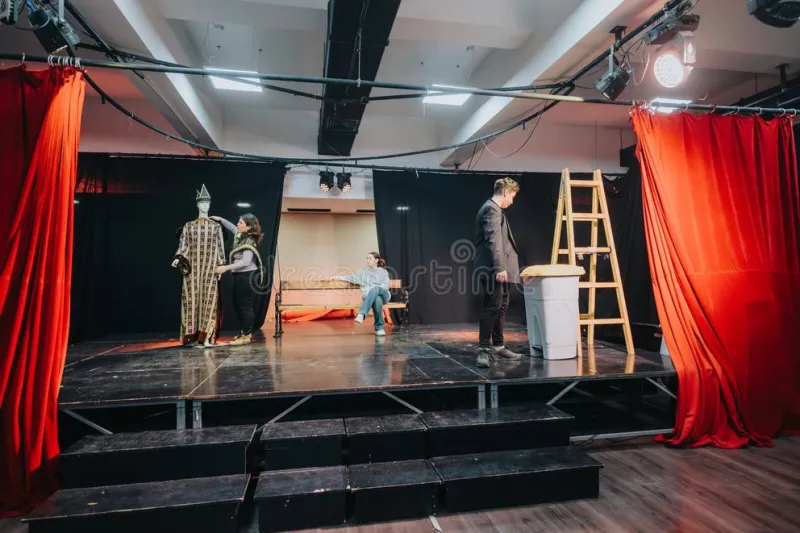
Photo: performer standing alone on empty stage spotlight dramatic decision, via images.stockcake.com
The Comfort of the Exit Sign
There is a particular kind of performer who is always, in some quiet corner of their mind, already leaving. They are on stage, yes—delivering lines, hitting marks, connecting with an audience—but somewhere behind their eyes, a small voice is running calculations. If this doesn't work out, I still have the accounting degree. I can always go back to teaching. The firm said the door was open.
This is not resilience. This is a divided self. And a divided self, no matter how talented, cannot give a whole performance.
The understudy mentality—the habit of maintaining a parallel professional identity as emotional insurance—is one of the most quietly destructive patterns in a performer's life. It masquerades as pragmatism. It presents itself as maturity. But beneath that sensible exterior lies a fundamental act of self-sabotage: the refusal to be fully present in the life you claim to want.
What the Safety Net Is Actually Catching
Let us be precise about what we mean by a backup plan, because not all contingencies are created equal. Having savings is not the same as having a fallback career. Maintaining a marketable skill is not the same as emotionally investing in an alternative professional identity. The distinction matters enormously.
A financial cushion supports your primary pursuit. A second career quietly competes with it.
When you spend mental bandwidth updating a résumé you hope never to use, attending networking events for an industry you claim to have left, or accepting freelance work in a former field because it feels safer than auditioning—you are not being smart. You are being split. Every hour spent maintaining the back door is an hour not spent mastering the craft behind the front one.
The research on cognitive load is unambiguous on this point: divided attention produces diminished results across both tasks. Performers are not exempt from this reality simply because their work feels more personal than a spreadsheet. If anything, the personal nature of artistic performance makes the cost of divided focus even higher. You cannot half-commit to vulnerability. You cannot partially inhabit a character. You cannot give sixty percent of yourself to a stage and expect a full return.
The Psychology Behind the Open Door
Understanding why performers cling to backup plans requires honesty about what those plans are actually managing—and it is rarely about money.
For most artists, the fallback career is a mechanism for managing fear of permanent failure. If the acting career collapses, the law degree means the collapse is not total. If the music career stalls, the corporate communications background means there is still a version of success available. The backup plan is, at its core, a story we tell ourselves about the limits of our potential failure.
But here is what that story costs: it also limits the ceiling of your potential success. Because the same psychological architecture that protects you from catastrophic loss also prevents you from making the kind of desperate, luminous, all-in choices that define extraordinary careers. The performers who change the industry—the ones whose names become reference points for entire generations—are almost universally people who, at some critical juncture, removed the option of retreat.
This is not mythology. This is observable pattern. When the exit is unavailable, the entrance becomes everything.
When Contingency Becomes Character
There is a moment in many performers' careers when the backup plan stops being a contingency and starts being a personality trait. You can recognize it by the language that surrounds it.
I'm keeping my options open. I'm being realistic about the industry.
I'm not one of those people who puts all their eggs in one basket.
These phrases, repeated often enough, stop being descriptions of a strategy and start being descriptions of an identity. The performer is no longer someone who has a backup plan—they are someone who is not fully committed to their primary one. And audiences, casting directors, collaborators, and industry professionals can feel that ambivalence. It registers in the room before a single word is spoken.
Commitment is not merely internal. It is a vibration that other people detect. The performer who has truly chosen their path carries themselves differently than the one who is still deciding. That difference is not imaginary, and it is not unfair. It is simply the reality of what full investment looks like from the outside.
Redefining What It Means to Be Smart About Your Career
None of this is an argument for financial recklessness. Paying rent matters. Health insurance matters. The ability to eat regularly matters. These are not romantic abstractions—they are the infrastructure of a sustainable creative life, and ignoring them is not commitment; it is simply chaos.
But there is a meaningful difference between building financial infrastructure that supports your art and constructing a parallel professional life that competes with it. One is logistics. The other is ambivalence dressed in responsible clothing.
The genuinely smart approach to a performing career involves ruthless prioritization of the primary pursuit, supported by lean and flexible financial arrangements—not by the emotional weight of an alternative career waiting in the wings. It means taking the survival job that leaves your schedule open for auditions, not the prestigious position that gradually becomes your actual identity.
It means asking yourself, with uncomfortable honesty: Am I maintaining this backup plan because I might need it, or because I am afraid of what happens if I don't have it? Those are different questions, and they have different answers.
The Choice That Changes Everything
At some point, every serious performer faces a version of the same moment: the choice between the comfortable hedge and the uncomfortable commitment. It rarely arrives with fanfare. It usually looks like a small decision—whether to renew a professional certification, whether to accept a stable position that would require stepping back from the work, whether to keep paying dues to an industry you are no longer fully inhabiting.
The performers who build lasting careers are the ones who, when that moment arrives, choose the work. Not because they are reckless, but because they understand something that the understudy mentality obscures: you cannot audition for your own life from the wings.
The front door is the only one that leads where you actually want to go. Stop spending your energy keeping the back one open.