Prepared to Dare: How Having a Safety Net Sets You Free on Stage
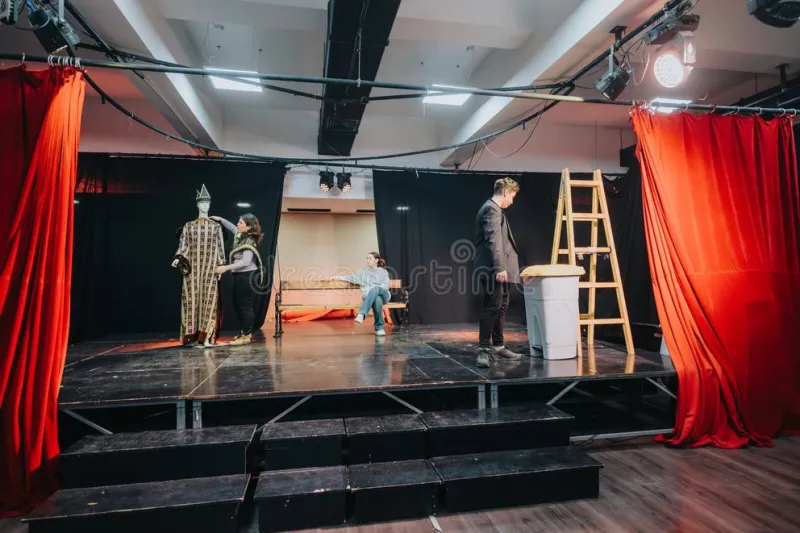
Photo: performer backstage preparing confident theater stage curtain, via thumbs.dreamstime.com
There is a persistent mythology in the performing arts that the greatest moments emerge from pure spontaneity—from artists who walk out without a script, without a rehearsed fallback, and simply surrender themselves to the moment. It is a romantic notion. It is also, in large part, a fabrication.
The performers who appear most liberated on stage, screen, or platform are almost universally the ones who have spent the most time preparing for things to go wrong. Their freedom is not the absence of structure—it is the direct consequence of having so much structure beneath them that they no longer need to think about it.
This is the paradox at the heart of what I have come to call the understudy mentality: the deliberate cultivation of backup material, alternative approaches, and contingency strategies not as a hedge against failure, but as the very mechanism through which exceptional performance becomes possible.
The Understudy Is Not the Lesser Performer
In American theater, the understudy occupies an uncomfortable symbolic space. The role implies secondary status, a permanent proximity to greatness without the full weight of it. And yet, ask any seasoned Broadway director which performer in a company tends to carry the deepest understanding of the production, and the answer will often surprise you.
Understudies must know every role intimately. They must be capable of stepping into any position at a moment's notice, which means they cannot afford the luxury of tunnel vision. They are, by the nature of their preparation, the most comprehensively informed people in the building.
This is the disposition worth adopting—not as a stage performer specifically, but as any artist who takes their craft seriously. Knowing only one way to deliver your work is a vulnerability. Knowing three ways to deliver it, and having rehearsed each of them, is a form of artistic fluency that audiences feel even when they cannot articulate why.
Redundancy as Creative Confidence
In aviation, redundancy is not a sign of distrust in the primary system—it is the reason pilots can operate with such precision and calm. The backup instruments exist so that the pilot's full attention can be devoted to flying, rather than to worrying about what happens if something fails.
The same principle applies to performance of any kind. When a stand-up comedian has material prepared for a hostile crowd, a distracted audience, or a venue with terrible acoustics, they are not planning to fail—they are liberating themselves from the fear of failure. That liberation translates directly into presence, into risk-taking, into the kind of loose-limbed confidence that audiences read as natural charisma.
I have watched performers with objectively weaker material outshine technically superior artists simply because they carried themselves with the ease of someone who had nothing to lose. In most cases, they did not have nothing to lose—they had simply prepared so thoroughly for every contingency that loss had ceased to feel threatening.
The Practical Architecture of a Backup Plan
Building this kind of redundancy into your practice is less complicated than it sounds, though it does require honest self-assessment.
Begin by identifying the moments in your work that carry the most pressure—the opening, the pivot, the close. These are the structural joints where failure, if it comes, tends to arrive first. For each of those moments, develop at least one alternative approach. Not a lesser version of your primary choice, but a genuinely different execution that serves the same purpose.
A musician performing original material might prepare two or three alternate arrangements of a signature piece—one stripped down for an intimate setting, one expanded for a large hall, one designed to work acoustically if the sound system falters. A speaker might develop multiple entry points into their central argument, capable of reading which framing will land with a given room before committing to it.
The goal is not to carry so many options that you become paralyzed by them. The goal is to carry enough that your primary choice feels chosen rather than defaulted to—that you are performing it because it is right for this moment, not because it is the only thing you know how to do.
When the Backup Becomes the Breakthrough
Some of the most memorable performances in American entertainment history were not the planned ones. They were the moments when something failed, a performer reached for their contingency, and what emerged was something neither the audience nor the artist had anticipated.
This is not an argument for engineering failure. It is an argument for recognizing that the material you prepare as a backup is often the material you are most free to inhabit, precisely because the pressure of it being your primary offering has been removed. Performers frequently report that their understudy material—the alternate version, the improvised pivot—carries a different quality of energy. It is looser, more immediate, more alive.
That quality is not accidental. It is the product of preparation meeting release.
The Discipline Behind the Spontaneity
There is nothing accidental about artistic freedom. Every performer who appears effortlessly spontaneous has, in almost every case, worked to construct the conditions under which spontaneity becomes safe. They have rehearsed enough variations that deviation from the plan does not trigger alarm—it triggers curiosity.
The understudy mentality, practiced consistently, rewires how an artist relates to uncertainty. Rather than treating the unexpected as a threat to be managed, the prepared performer begins to experience it as raw material to be used. The microphone cuts out. The venue is half-empty. The audience is younger, older, louder, quieter than anticipated. None of these conditions represent failure—they represent a different set of circumstances within which the work must be delivered.
And because the prepared artist has already imagined and rehearsed for circumstances like these, they are not scrambling. They are adapting. They are, in the truest sense of the word, performing.
That is the gift of the backup plan. Not that it saves you when things go wrong, but that it gives you the confidence to go further when everything goes right.