The Platform and the Person: Navigating Authenticity in the Age of the Personal Brand
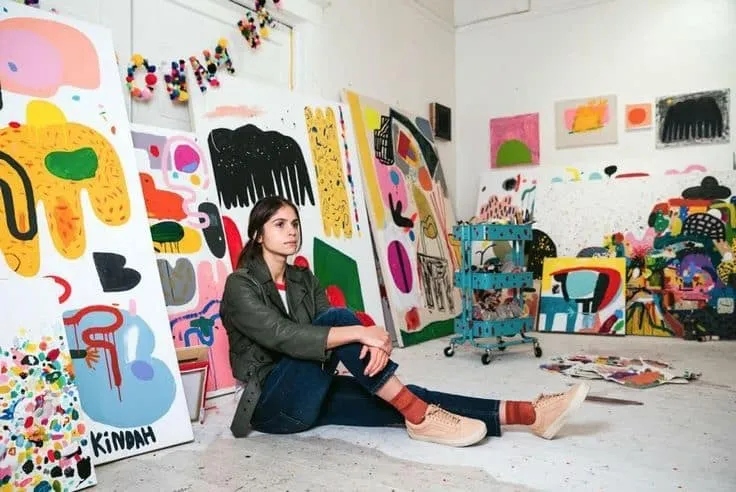
Photo: artist performer thoughtful personal brand identity creative studio, via www.artdex.com
Let me be direct about something that the entertainment industry rarely discusses with candor: the machinery of personal branding, as it currently operates in the United States, is not neutral. It does not simply amplify who you are. Left unchecked, it systematically replaces who you are with who performs best.
This is not a new tension. Artists have navigated the gap between commercial viability and creative integrity since long before the term "personal brand" entered the cultural vocabulary. What is new is the granularity of the surveillance — the way that audiences, platforms, and industry gatekeepers now monitor not just the work but the person behind it, in something approaching real time. The result is a set of pressures that can quietly hollow out a performer's identity if they are not paying close attention.
What "Brand" Actually Means for a Performer
The word "brand" carries a great deal of commercial baggage, and understandably so. Its origins are transactional: a brand is a mark of ownership, a signal of consistent quality, a promise to the consumer about what they are purchasing. When applied to a human being — to an artist, a storyteller, a performer — the concept requires significant translation before it becomes useful rather than corrosive.
A performer's brand, properly understood, is not a marketing strategy. It is the accumulated impression of everything they have chosen to make, say, and stand for over the course of a career. It is the answer to the question a stranger might ask after watching your work for the first time: Who is this person, and why does what they do matter?
The problem arises when the process of building that impression becomes untethered from the actual convictions and creative instincts of the artist. When the brand becomes a product designed by committee — or by algorithm — rather than a genuine expression of the performer's perspective, something essential is lost. And audiences, even audiences who cannot articulate exactly what they are sensing, tend to feel that loss.
The Compression Problem
Social media has introduced a specific distortion into the way artists present themselves publicly. The platforms reward consistency, frequency, and emotional accessibility. They favor the performer who shows up daily, who speaks in a register that is warm and relatable, who packages complex experiences into digestible formats.
None of these qualities are inherently problematic. The difficulty is in what they quietly discourage: ambiguity, difficulty, the kind of work that requires patience from an audience before it delivers its rewards. A performer who builds their platform primarily through social media engagement faces a structural pressure to sand down the rougher, stranger, more challenging aspects of their artistry — the very aspects that often contain the most genuine expression.
I have watched talented people compromise their most interesting work in pursuit of metrics. Not out of cynicism, but out of a very human desire for validation and reach. The platform offers a version of audience connection that is immediate and quantifiable, and that immediacy can become its own form of dependency.
Commercial Success Is Not the Enemy
It would be a mistake to read this as an argument against financial sustainability or professional ambition. A performer who cannot sustain a career is a performer whose voice eventually disappears from the conversation entirely. There is nothing virtuous about artistic poverty, and there is nothing corrupt about earning a living from one's craft.
The distinction I am drawing is between growth that emerges from the work and growth that is imposed upon the work. The former tends to be durable. The latter tends to be brittle. When a performer expands their audience by making their best work more accessible — by finding new contexts, new platforms, new collaborators who amplify rather than dilute the original vision — that is a form of commercial success that strengthens rather than erodes the artistic foundation.
When a performer reshapes their work to fit a market trend, chasing the aesthetic or the subject matter that is currently generating the most attention, the result is rarely convincing. Audiences are perceptive. They can distinguish between a performer who has genuinely evolved and one who has pivoted for strategic reasons.
The Question of What You Will Not Do
In my experience, the clearest expression of a performer's values is not what they choose to create — it is what they decline. The sponsorships they turn down. The collaborations they walk away from. The editorial directions they resist, even when the pressure to comply is significant.
These refusals are rarely public. They do not generate press releases or social media posts. But they accumulate over time into something that audiences and industry colleagues alike can sense: a coherence between the work and the person making it. That coherence is, ultimately, what makes a career feel meaningful rather than merely successful.
This is not a comfortable position to occupy. The entertainment landscape in the United States is competitive, and the cost of principled refusal can be real and immediate. Opportunities close. Revenue streams narrow. The path forward becomes less obvious. I do not want to romanticize the difficulty of these choices or suggest they come without consequence.
What I will say is that the alternative — a career built on the systematic abandonment of one's own judgment — tends to produce a particular kind of exhaustion. Not the productive exhaustion of demanding creative work, but the hollow exhaustion of performing a version of yourself that no longer corresponds to anyone real.
Sustainability as an Ethical Standard
The most useful framework I have found for navigating these pressures is to ask not "What will grow my platform?" but "What is sustainable?" Sustainability, in this context, means something broader than financial viability. It means: Can I continue doing this work in five years without having become someone I do not recognize? Does this choice compound my creative capacity over time, or does it deplete it?
A career in performance that is built on genuine expression — even when that expression is commercially inconvenient — tends to answer both questions favorably. The work deepens. The audience, though perhaps smaller than what a more strategically optimized approach might yield, develops a quality of engagement that no algorithm can manufacture.
That, in the end, is the only brand worth building: the one that is simply, stubbornly, consistently you.