What Your Scene Partner Is Teaching You (If You Would Only Stop Rehearsing Your Next Line)
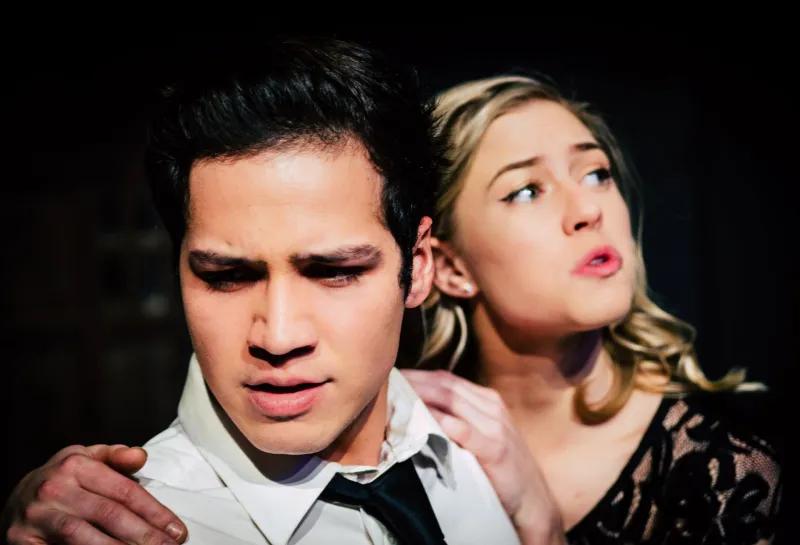
There is a particular kind of stillness that separates the merely competent performer from the genuinely compelling one. It is not the stillness of inaction. It is not the blankness of someone waiting for their moment. It is the concentrated, alert, fully inhabited stillness of a person who is actually listening — not performing the act of listening, but surrendering to it completely.
I have spent enough time on stages, in rehearsal rooms, and in the uncomfortable folding chairs of green rooms to recognize the difference immediately. You can see it in the eyes. You can feel it in the air between two people sharing a scene. When one performer is genuinely present to the other, something shifts in the room. The audience leans forward without knowing why. The story becomes, somehow, more true.
And yet, listening remains one of the most consistently undertaught, undervalued, and underpracticed skills in the performing arts.
The Illusion of Preparation
Most of us arrive at rehearsal having done our homework. We know our lines. We have made our choices. We have decided, in the privacy of our own preparation, how a scene should feel, what our character wants, and how the arc of the moment should land. This is not wrong. Preparation is the foundation. But preparation can also become a prison.
When we walk into a scene already certain of how it will unfold, we are no longer in a conversation. We are delivering a monologue with pauses built in for another person's voice. We are waiting, not listening. We are managing, not responding. The technical execution may be flawless, and the audience may never know the difference — but the performer across from us always does.
I remember a director, early in my career, stopping a run-through midway through a pivotal exchange. She did not raise her voice. She simply said, "You're not in there with each other. You're both alone up here." It was one of the most clarifying and uncomfortable observations I had ever received. She was right. We were two people delivering prepared emotional packages at one another, rather than two people genuinely inhabiting a shared moment.
What Listening Actually Requires
Genuine listening, in the context of performance, is not passive. It is one of the most demanding forms of active engagement available to a performer. It requires the willingness to be changed by what you hear — to let your scene partner's choices, their timing, the unexpected catch in their voice or the slight hesitation before a word, actually land inside you and alter your response.
This is frightening for a very specific reason: it means releasing control. It means accepting that the scene you rehearsed may not be the scene you perform, because your partner brought something tonight that they did not bring in the rehearsal room, and honoring that truth requires you to adapt in real time.
The performers who are most capable of this tend to share a particular quality. They are genuinely curious about other people. Not professionally curious, not strategically curious, but authentically interested in what another human being is carrying into a given moment. That curiosity, translated to the stage, becomes the engine of real ensemble work.
The Scene Partner as Mirror
There is something the acting classroom cannot replicate, no matter how gifted the instructor or how thoughtfully designed the curriculum. A teacher can give you tools. A scene partner gives you a living, breathing, unpredictable human being — and that is an entirely different education.
Every performer you share a stage with teaches you something about yourself. The partner whose energy runs faster than yours forces you to find your ground. The partner who goes quieter than you expected teaches you how to reach without grasping. The partner who makes a choice you never anticipated shows you, in the most immediate possible way, whether your listening is real or merely decorative.
Over time, the performers who absorb these lessons accumulate a kind of intelligence that is difficult to name but impossible to miss. They become more specific. More responsive. More human in their portrayals, because they have spent years genuinely engaging with other humans rather than simply performing alongside them.
Listening as Storytelling
Here is the thing that took me longest to understand: listening is not the setup for storytelling. Listening is storytelling.
When an audience watches a performer genuinely receive what their scene partner offers — when they see the moment of impact register in real time, when they witness one person actually changed by what another person says — they are watching the most fundamental human drama there is. They are watching connection happen. They are watching the story live.
The greatest storytellers I have encountered across stage, screen, and the spoken word are, without exception, extraordinary listeners. Not in the polished, performative sense of nodding at appropriate intervals, but in the deeper sense of being genuinely altered by what enters them. They carry their partners' words somewhere real, and what comes back out is shaped by the encounter.
This is what transforms a technically proficient performance into something that lingers. It is not the line reading. It is not the blocking. It is the evidence, visible to anyone paying attention, that this person was truly present to another human being.
The Practice Nobody Assigns
Listening, unlike most performance skills, cannot be practiced alone. You cannot rehearse genuine receptivity in your apartment. You cannot drill responsiveness without another person in the room. This makes it inconvenient in an era that prizes individual preparation, self-directed study, and the optimization of solitary practice.
But it also means that every rehearsal, every table read, every stumbling first run-through with a new ensemble is an opportunity that most performers allow to pass unutilized. The script is already memorized. The choices are already made. And so the rehearsal becomes a series of technical refinements rather than a genuine exploration of what happens when two people actually meet.
The invitation, if you choose to accept it, is to treat every moment opposite another performer as primary research. Not into the character. Into the human. Into what it means to be changed by another person's presence, and to let that change become the performance.
The acting class will teach you technique. Your scene partner, if you let them, will teach you everything else.