The Art of Getting Out of the Way: When Serving the Story Is the Greatest Performance of All
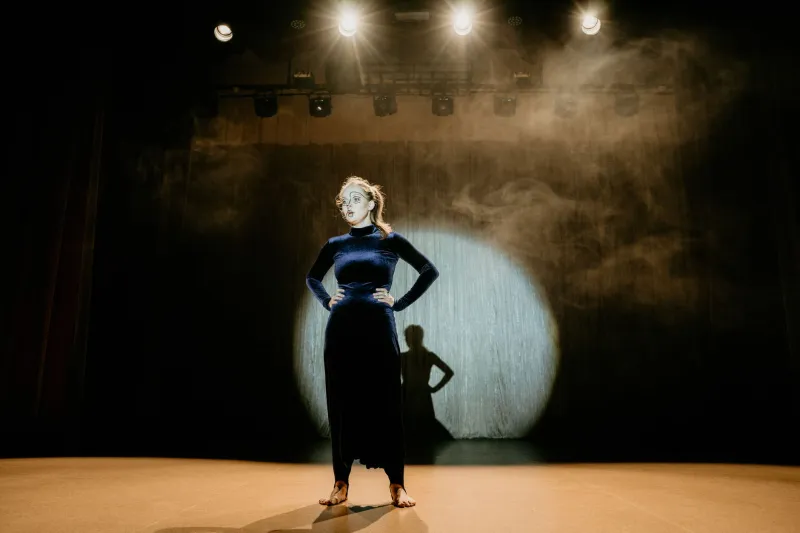
There is a moment I return to often—not from a Broadway stage or a film set, but from a small black-box theater in Chicago where I watched a performer do something I had never quite seen before. She was playing a grieving mother in a quiet, under-produced drama. There were no technical flourishes, no swelling score beneath her monologue, no lighting trick to soften the edges. There was only her, and the words, and the aching sense that I had forgotten entirely that I was watching a performance.
I did not leave that theater thinking about her. I left thinking about the story.
At the time, I did not fully understand why that bothered me. It took years of my own work—years of stepping onto stages, into recording booths, in front of cameras—before I recognized what I had witnessed that night. She had done something extraordinary. She had made herself invisible.
The Ego Problem Every Performer Has to Solve
Performing is, by its very nature, an act of visibility. You step into a light that someone else arranged for you. You speak words that have been rehearsed. You occupy a space that an audience has paid, in some form, to observe. The entire architecture of performance invites the performer to become the center of gravity.
And yet the greatest danger in that invitation is accepting it too completely.
Ego—not confidence, but ego—is the force that makes a performer reach for effect rather than truth. It is the impulse that turns a quiet scene into a showcase, that pushes a line reading toward applause rather than recognition, that privileges the performer's comfort over the material's demands. Most of us carry it. The work of a serious artist is learning to manage it, to redirect it, to occasionally starve it entirely.
This is not a call for self-erasure. Stage presence is real, and it matters. But there is a critical difference between presence that amplifies the story and presence that competes with it.
What Restraint Actually Requires
When performers talk about restraint, the conversation often gets confused with passivity. Restraint is not doing less. It is doing precisely what is required and nothing more—a discipline that demands far more internal energy than playing to the back row ever could.
Consider the technique of active listening, which sounds deceptively simple. In a scene with another performer, the temptation is to spend the moments when you are not speaking preparing what you are about to say. The audience, however, can see everything. They notice when a performer stops inhabiting the scene and begins rehearsing within it. Real listening—the kind that registers surprise, grief, or joy in real time—creates a texture that no amount of technical preparation can manufacture.
Similarly, physical economy communicates a performer's relationship to the material. A single gesture, earned through restraint, carries more weight than a performance built on continuous movement. The stillness around a moment is what gives that moment its edges. When everything is expressive, nothing is.
Voice, too, is a place where the impulse to perform can overwhelm the impulse to communicate. A line delivered at conversational pitch, with genuine intention behind it, will often land harder than the same line projected for effect. Audiences are perceptive in ways that performers sometimes underestimate. They feel the difference between a performer who is moved and one who is demonstrating being moved.
The Story as the True Lead
There is a reframing that changed how I approach every piece of work I take on: the story is not the vehicle for the performance. The performance is the vehicle for the story.
This sounds obvious when stated plainly. In practice, it requires a constant recalibration. It means asking, before every choice, whether a decision serves the narrative or serves the performer's desire to be noticed. It means being willing to play a scene in a way that gives the other performer the moment, even when the structure of the scene nominally centers you. It means trusting that truth, consistently rendered, is more arresting than spectacle.
Some of the most technically accomplished performers I have encountered struggle with this precisely because their skill gives them options. When you can do many things well, the temptation to demonstrate that range is persistent. The discipline is choosing the right thing over the impressive thing—and recognizing that, in the hands of a great artist, those are sometimes the same, but not always.
The Paradox of the Invisible Performance
Here is the strange mathematics of disappearing into the work: audiences remember the story, but they seek out the performer again.
When a performance is technically showy, viewers often recall the performer but not the piece. They remember the moment, the trick, the emotional peak—but not the through-line that made it meaningful. When a performance is truly selfless, however, something different happens. The story lodges itself in memory, and the performer becomes associated with a quality of experience that audiences hunger to return to. They may not be able to articulate exactly what the performer did. They know only that something real happened, and that this particular artist was the one who made it possible.
That is a longer, quieter kind of reputation to build. It does not generate the immediate applause that a showstopping moment does. But it generates trust—the kind that sustains a career across decades rather than seasons.
A Practice Worth Building
For any performer genuinely interested in developing this capacity, the work begins in rehearsal, not in performance. It begins with the habit of asking, after every run-through, what choices were made for the story and what choices were made for the self. It begins with seeking out collaborators and directors who will be honest about the difference.
It also begins with a willingness to be uncomfortable. Restraint, in the early stages, feels like withholding. It can feel like failure. There is a particular anxiety in a quiet moment on stage, in the silence that follows an understated choice, before the audience's response confirms that the choice landed. Learning to tolerate that silence—to trust it—is part of the education.
The performer who stood in that Chicago theater and made me forget she was performing did not achieve that through accident or natural talent alone. She had learned, through years of practice and probably no small amount of professional humility, how to step aside. How to let the story move through her rather than originating in her.
That is the craft. That is the work. And in my experience, it is the work that lasts.