Turning Terror into Triumph: The Mental Architecture of a Fearless Performer
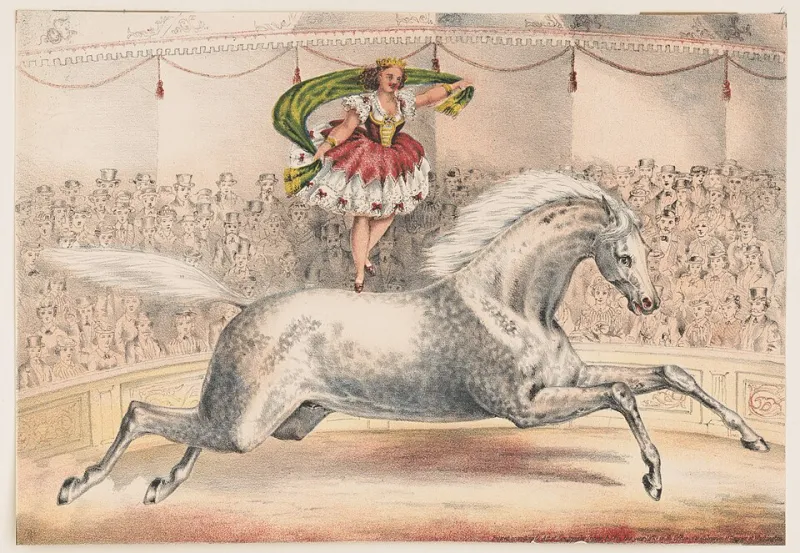
Photo: Popular Graphic Arts, Public domain, via Wikimedia Commons
The Moment I Almost Walked Away
There is a particular kind of silence backstage — not peaceful, not restorative, but the silence of a held breath. I remember standing in the wings of a mid-sized theater in Chicago, approximately twelve minutes before my entrance, and feeling something close to complete system failure. My hands were cold. My thoughts had become a tangled loop of worst-case scenarios. The audience on the other side of that curtain felt less like an opportunity and more like a verdict waiting to be delivered.
I nearly left. Not just that theater — the entire pursuit.
What stopped me was not courage, not bravado, and certainly not some sudden flood of confidence. What stopped me was a single question I had recently learned to ask myself in moments of overwhelm: Is this sensation energy, or is it danger? The answer, almost always, is energy. And energy, unlike danger, is something a performer can work with.
That reframe — small, almost embarrassingly simple — became the first brick in what I now think of as the mental architecture of performance. Over years of study, practice, failure, and gradual refinement, I have built a structure inside my mind that allows me to walk into high-stakes performance situations not as someone trying to suppress fear, but as someone who has learned to metabolize it.
Redefining What Nerves Actually Mean
The entertainment industry has a complicated relationship with vulnerability. We celebrate it in retrospect — in the tearful acceptance speech, in the memoir published after the comeback — but in the actual moment of preparation and execution, there remains a persistent cultural myth that true professionals simply do not get nervous. That composure is the default state of the seasoned artist.
This is, to put it plainly, false.
Neuroscience has made considerable progress in illuminating why the body responds to performance the same way it responds to perceived threat. The elevated cortisol, the accelerated heart rate, the heightened sensory awareness — these are not signs of weakness or inadequacy. They are signs that the nervous system is paying attention. The performer who walks onstage completely flat, completely unbothered, is often the performer who delivers a technically proficient but emotionally inert experience.
The goal, as I eventually came to understand it, is not the elimination of nervous energy. The goal is its redirection.
Psychologists sometimes refer to this process as "arousal reappraisal" — the deliberate cognitive act of relabeling physiological excitement as enthusiasm rather than anxiety. Studies conducted at institutions like Harvard Business School have demonstrated measurable improvements in performance outcomes when subjects were coached to say "I am excited" rather than "I am nervous" before high-pressure tasks. The physiological state is nearly identical. The psychological framing determines whether that state becomes a resource or a liability.
For me, this reframing took sustained, intentional practice. It did not happen overnight, and it did not happen through willpower alone.
The Pre-Performance Architecture
Over the course of my career, I have developed a pre-performance ritual that I treat with the same seriousness as any rehearsal. Rituals matter not because they are magical, but because they are reliable. They signal to the nervous system that a transition is occurring — from ordinary life to performance mode — and they create a sense of agency in a situation that can otherwise feel entirely out of one's control.
My ritual begins approximately ninety minutes before any significant performance. The first component is physical: a deliberate, unhurried warm-up that moves through the body from the feet upward, ending with the voice and the face. This is not about loosening muscles in the conventional athletic sense. It is about occupying the body fully, bringing attention down from the spinning mind into the physical instrument that will actually do the work.
The second component is breathwork. I practice a technique sometimes called box breathing — four counts of inhalation, four counts of hold, four counts of exhalation, four counts of hold — for a minimum of five minutes. The physiological effect is real and well-documented: it activates the parasympathetic nervous system, slows the heart rate, and creates a measurable reduction in cortisol. The psychological effect, however, is equally important. It is an act of deliberate attention. You cannot think about what might go wrong while you are counting your breath. The mind can only hold so much at once.
The third component is what I call the "anchor statement" — a single sentence, specific to each production or performance, that encapsulates what I am there to give rather than what I am there to get. The distinction is critical. Performers who are focused on what the audience will think of them are fundamentally in a receiving posture. Performers who are focused on what they intend to offer are in a giving posture. The giving posture is infinitely more sustainable under pressure.
What Rehearsal Actually Builds
There is a common misconception that rehearsal exists to eliminate mistakes. In my experience, its more important function is to build what I think of as procedural trust — the deep, cellular confidence that comes from having done something so many times that the body knows the path even when the conscious mind goes momentarily offline.
Pressure has a way of narrowing consciousness. In a high-stakes moment, the prefrontal cortex — the seat of complex reasoning and decision-making — can become less accessible. Athletes call this "choking." Performers call it going blank. What protects against it is not more thinking but more embodied repetition.
This is why I rehearse differently depending on the phase of preparation. Early rehearsals are exploratory — loose, curious, willing to fail. Middle rehearsals are structural — building the scaffolding, establishing the reliable beats. Late rehearsals are deliberately pressure-tested. I introduce interruptions, distractions, simulated technical failures. I practice continuing through discomfort rather than stopping when something goes wrong. By the time I reach a live audience, I have already met and survived a version of nearly every obstacle that might arise.
The Ongoing Work
I want to be honest about something: this is not a problem I solved once and filed away. The architecture I have described requires maintenance. There are performances — even now, after years of this work — where the nervous system makes its presence loudly known and the reframing requires genuine effort rather than automatic response.
What has changed is not the presence of fear but my relationship to it. Fear, I have come to believe, is not the enemy of great performance. Indifference is. The performer who no longer feels anything before walking onstage has likely stopped caring about the work in the way that makes the work worth experiencing.
The standing ovations I value most are not the ones that followed technically perfect performances. They are the ones that followed performances where something genuine passed between myself and the audience — where the nervous energy I carried into the wings became, somehow, the fuel for something real.
That is the transformation I keep working toward. Not the absence of pressure, but the capacity to perform beautifully inside of it.