Thirty Chairs and a Clearer Mirror: The Career Case for the Small Room
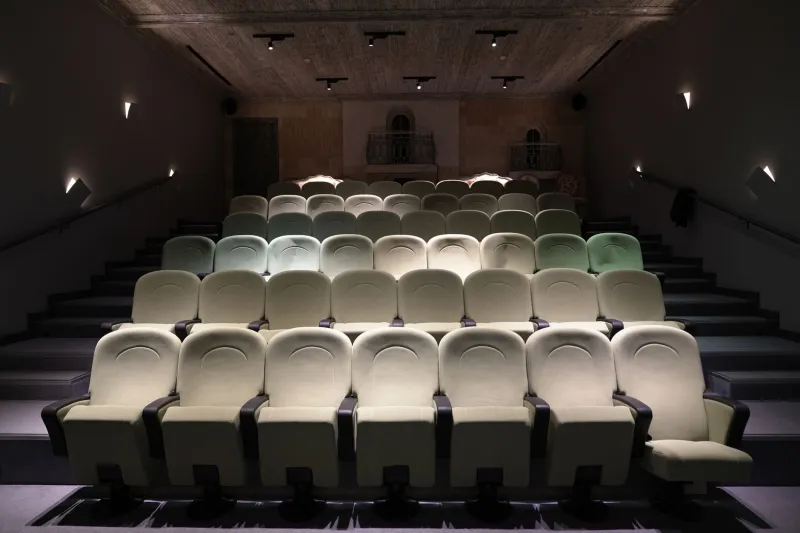
There is a durable assumption in the performing arts that a career moves in one direction: from the small room to the larger one. Thirty people are treated as a way station; three thousand are treated as arrival. The assumption is tidy, and it is often wrong. A small audience does not simply offer a smaller version of a large one. It creates a different physics. The attention is closer, the feedback is faster, and the stakes are sharpened by the fact that no one in the room can be reduced to a silhouette.
The Economics of Attention
In a room of thirty, each person is not a fraction of a crowd. Each person is a witness. The performer can see faces, hear laughter arrive without delay, and feel the room’s temperature change when a choice lands or fails. That proximity produces information that a large hall tends to blur. A big audience can tell you that the evening worked; a small audience can tell you why. For a performer building a career in 2026, that distinction matters more than ever. Algorithms reward reach, but reach is a poor teacher. Attention is the better one.
Small rooms also produce a different kind of word-of-mouth. Three thousand people may leave with a pleasant impression and no story. Thirty people may leave with a specific anecdote: the moment the performer abandoned the script, the joke that turned into a confession, the song that was almost too quiet to hear. Specific stories travel. General impressions evaporate. The person who can describe your work in one precise sentence is worth more than a hundred who can only say it was good.
Why Scale Can Obscure the Work
Large rooms reward broad strokes. They demand projection, stamina, and a certain simplification of gesture. Those are real skills, and no performer should dismiss them. But scale can also hide weaknesses. A missed transition disappears in the wash of a big crowd. A thin characterization can be carried by lighting and distance. A small room removes those buffers. It asks whether the work itself can hold attention without spectacle. That is not a punishment. It is a diagnostic.
The risk is that performers treat small-room gigs as career detours, obligations to be endured before the real work begins. That attitude leaks into the performance. An audience can feel when it is being treated as a stepping stone. The performer who arrives in a thirty-seat theater already thinking about the three-thousand-seat one is not fully in the room. And the room knows.
Choosing the Right Small Room
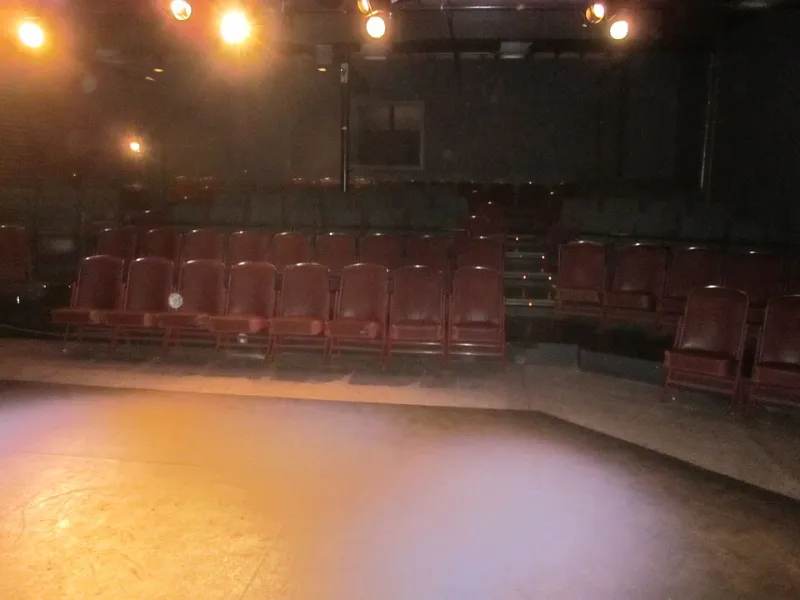
Not every intimate space is useful. A small room with bad sightlines, indifferent management, or an audience that has come only for the bar is not a laboratory; it is a distraction. The performer should choose with the same care they would apply to a larger booking. Look for a presenter who programs with intent, a space where the audience can actually see and hear, and a room that has a recurring audience rather than a one-time crowd. A black box theater, a listening room, a house concert series, a comedy club’s early show, a library basement with a serious curator: these can all work. The common factor is not size. It is attention.
Practical questions help. Is the room set up so that the performer can make eye contact without straining? Is the sound system appropriate for the work, or will amplification create a wall between you and the audience? Does the presenter allow time for conversation after the show? Is recording permitted, and if so, under what terms? Will the audience be seated, standing, eating, or drifting? The answers determine whether the gig will produce usable information or merely consume a night.
Preparing for Proximity
Small-room preparation is not simply large-room preparation at lower volume. The performer must recalibrate. Material that relies on broad caricature may need finer shading. Transitions that can be covered by a lighting cue in a big house must be earned in a small one. The voice can be quieter, but it cannot be less precise. The body can be smaller, but it cannot be less intentional.
Choose one experiment for each small-room performance. It might be a new opening, a different order of songs, a slower tempo in a monologue, or a direct address to the audience that you have never tried. Define success in advance: Did the experiment produce the response you expected? Did the room’s attention hold? Did a specific moment change the meaning of the piece? This turns the gig into a genuine inquiry rather than a referendum on your worth. It also protects you from the temptation to change everything at once.
Converting Thirty Into Momentum
The small room becomes a career asset only if the performer treats the follow-up as part of the work. Collect names and contact information in a way that respects the audience. Ask for one specific referral rather than a vague promise to tell friends. Document the evening: record if permitted, write a short debrief while it is fresh, note which choices landed and which did not. Keep a file of audience comments that describe the work with precision, not just praise.
Then build a circuit. Thirty people in one room is not a career, but thirty people in five rooms, repeated over a season, begins to look like one. Presenters talk to other presenters. Audiences talk to other audiences. The performer who becomes known as someone who does well in intimate spaces creates a reputation that larger venues can eventually use. That reputation is not a consolation prize. It is proof of craft.
The Doctrine
The small room is not a detour from the real career. It is where the real career is often made. Thirty people can launch a performer faster than three thousand because thirty people can see the work clearly, describe it specifically, and return with friends. Scale can amplify a career, but it cannot build one. The performer who learns to choose, prepare for, and capitalize on the intimate room is not thinking small. They are thinking precisely.